The best time to visit Key West depends on what you want from the water. Ask the crews at the Seaport and you will get two answers. The schooner captains love winter, when the trade winds fill the sails and the sunsets are sharp. The snorkel and parasail crews love summer, when the ocean goes flat and warm and you can see the bottom from the deck.
Here is how the year actually goes, from people who are out on it every day.
The short version
- Best overall weather: March and April. Warm, dry, breezy, not yet humid. Also the most expensive.
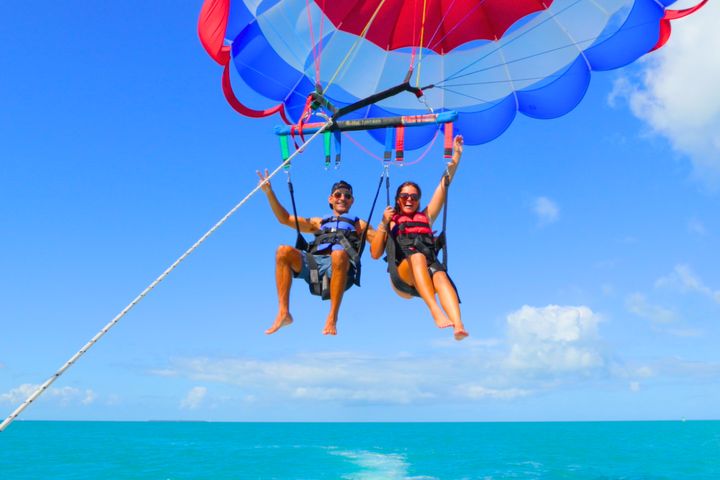
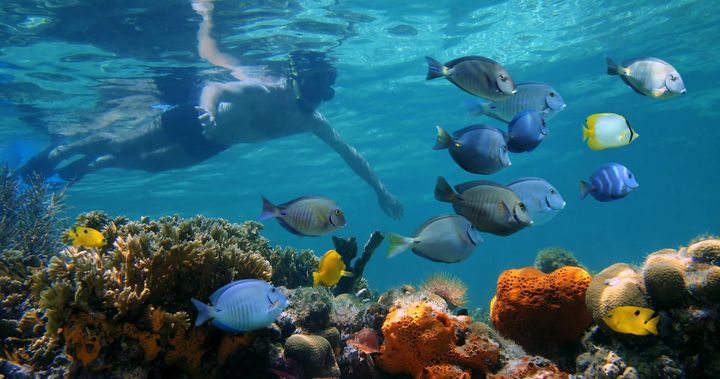
- Best water for snorkeling and parasailing: May through September. Glassy mornings, 85°F water, the clearest reef visibility of the year.
- Best value: September and early October, and the first two weeks of December. Lowest room rates, fewest people on the boats.
- Avoid if you can: peak hurricane weeks from late August through mid October, unless you buy travel insurance and stay flexible.
Water temperature by season
| Months | Water temp | What it means |
|---|---|---|
| Dec to Feb | 70 to 75°F | Fine for a quick snorkel, chilly for an hour. Wetsuit tops are provided on most boats. |
| Mar to Apr | 75 to 80°F | Comfortable. The reef is clear and the sandbars are warm by mid-afternoon. |
| May to Oct | 82 to 88°F | Bathwater. The best snorkeling and sandbar months of the year. |
| Nov | 78 to 80°F | Still warm, with the first fronts bringing wind. |
Month by month
January and February
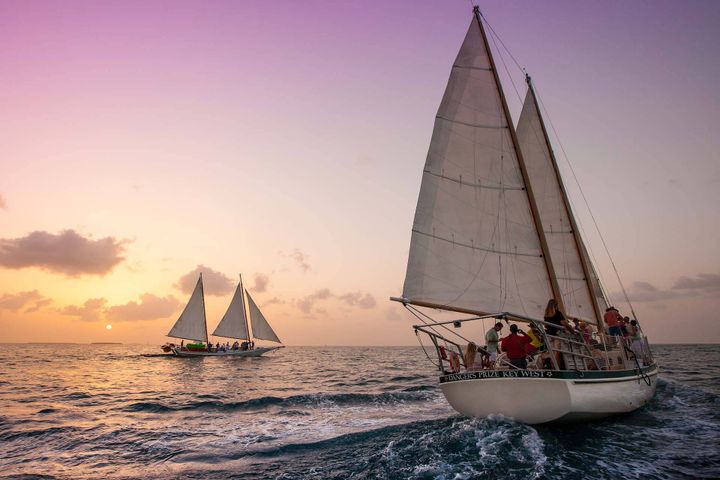
High season, and the island is full. Daytime highs in the mid-70s, cool nights, and a steady northeast breeze after each cold front. The fronts are what matter on the water: for two or three days after one passes, the Atlantic side gets choppy and the reef trips move to the lee of the island or cancel, while the backcountry stays protected. The dolphin tour and the sail, snorkel and kayak trip run on the Gulf side and are the safer bets in a front. Sunset sails are at their best, because the horizon is clearest in dry air. Book the Wind & Wine sail a week or more out.
March and April
The sweet spot. Water warms into the high 70s, the wind settles, spring break brings a younger crowd in March, and April has the Conch Republic celebration. Everything on the list runs daily and fills up, so book the parasail and the sandbar trip a few days ahead. Room rates peak here.
May and June
Locals’ favorite months. The crowds thin after Memorial Day, the water hits 82 to 85°F, and the mornings go glassy. This is when the reef looks like the brochure, so this is when to book the reef snorkel. Afternoon thunderstorms start in June, usually a 45-minute downpour around 3 or 4 pm that clears for sunset. Morning tours are rarely affected.
July and August
Hot, humid, and calm. Highs near 90 with heavy afternoon storms, but the ocean is flat almost every morning and warm enough to stay in for hours. It is the best stretch of the year for parasailing and the jet ski tour, because there is no chop. Hemingway Days is in late July. Lobster mini-season at the end of July fills every hotel and boat with Floridians for two days.
September and early October
The quietest, cheapest weeks of the year, and the peak of hurricane season. Most years nothing happens and you get warm water, empty boats and half-price rooms. Some years a storm closes the Keys for a week. The rule: book refundable rooms, buy travel insurance, and watch the forecast ten days out. Fantasy Fest in the last ten days of October flips the switch back to full.
November
The first cold fronts arrive, usually mild, and the humidity breaks. The powerboat races fill the second week. Water is still 78 to 80°F, so snorkeling is fine, and sunset sails start their best stretch. Early November is an underrated time to come.
December
The first two weeks are a quiet bargain. From the 20th on, it is the busiest two weeks of the year. New Year’s Eve has three separate drops on Duval (a conch shell, a drag queen in a giant shoe, and a pirate wench from a mast at the Seaport). Water drops into the low 70s, so the sandbar is more wade than swim.
Hurricane season, honestly
Hurricane season runs June 1 to November 30, but the real risk window for the Keys is mid-August through mid-October. The rest of the season is mostly afternoon storms. Tour operators refund or reschedule for weather, so the money at risk is your room and flight, which travel insurance covers. If a storm is forecast, the tours shut down two or three days ahead, the island evacuates visitors, and it reopens quickly once the all-clear is given.
Cruise-ship days
Up to three ships a day tie up at Mallory Square and the Navy mole from roughly 7 am to 4 pm, mostly in winter. Duval and the Seaport get crowded between 10 and 3, and the morning tour slots fill with ship passengers. Check the port schedule online, book the earliest departures, and plan Duval for the evenings.
Which trip, which month
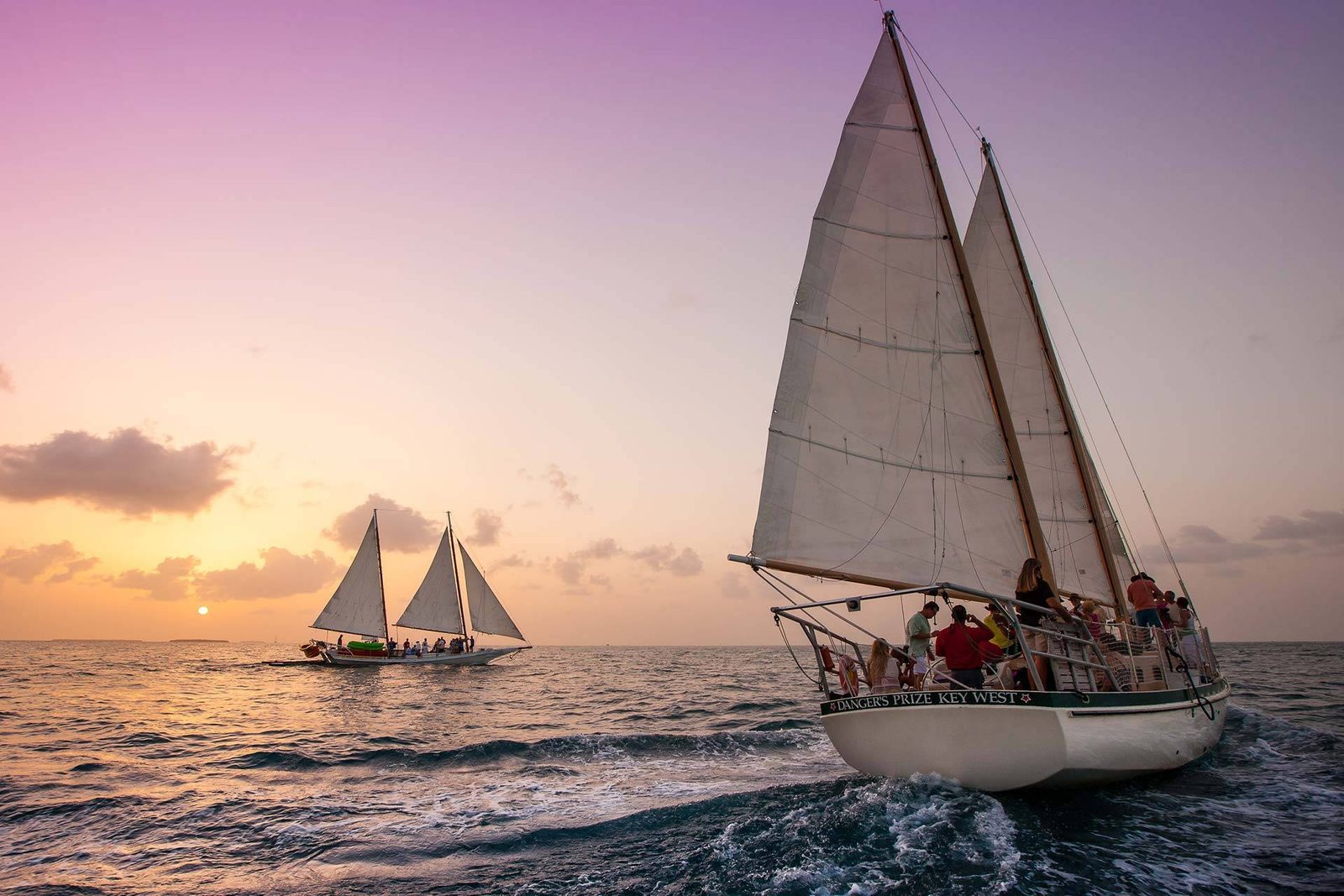
- Sunset sails: November through April, for the sharpest horizons and the breeze to actually sail. Wind & Wine sunset sail.
- Reef snorkeling: May through September for warm, clear, flat water. Reef snorkel trip.
- Parasailing: any month, but summer mornings are the smoothest flights. Parasailing.
- Dolphins: year round. The pods live here. Calm days make them easier to find, which favors summer, but winter trips run in the lee. Dolphin watch and snorkel.
- Sandbar days: April through October, when the water is warm enough to float in for two hours. Sandbar and dolphin trip.
- Jet ski tour: any month; summer for flat water, winter for cooler air. Jet ski island tour.
- Kayak and backcountry: year round; winter mornings are the most pleasant to paddle. Sail, snorkel and kayak.
Whenever you come, book the morning slots first. They have the calmest water, the lightest wind and the smallest crowds, and they leave your afternoon free for the pool, Fort Zach and a long walk to the Seaport for sunset.
See the complete list of top-rated Key West adventures and our 25 best things to do in Key West.
Written by Key West locals who spend their days on the water. How we make money.